
CAIRA is Prosidio's QMS AI agent.
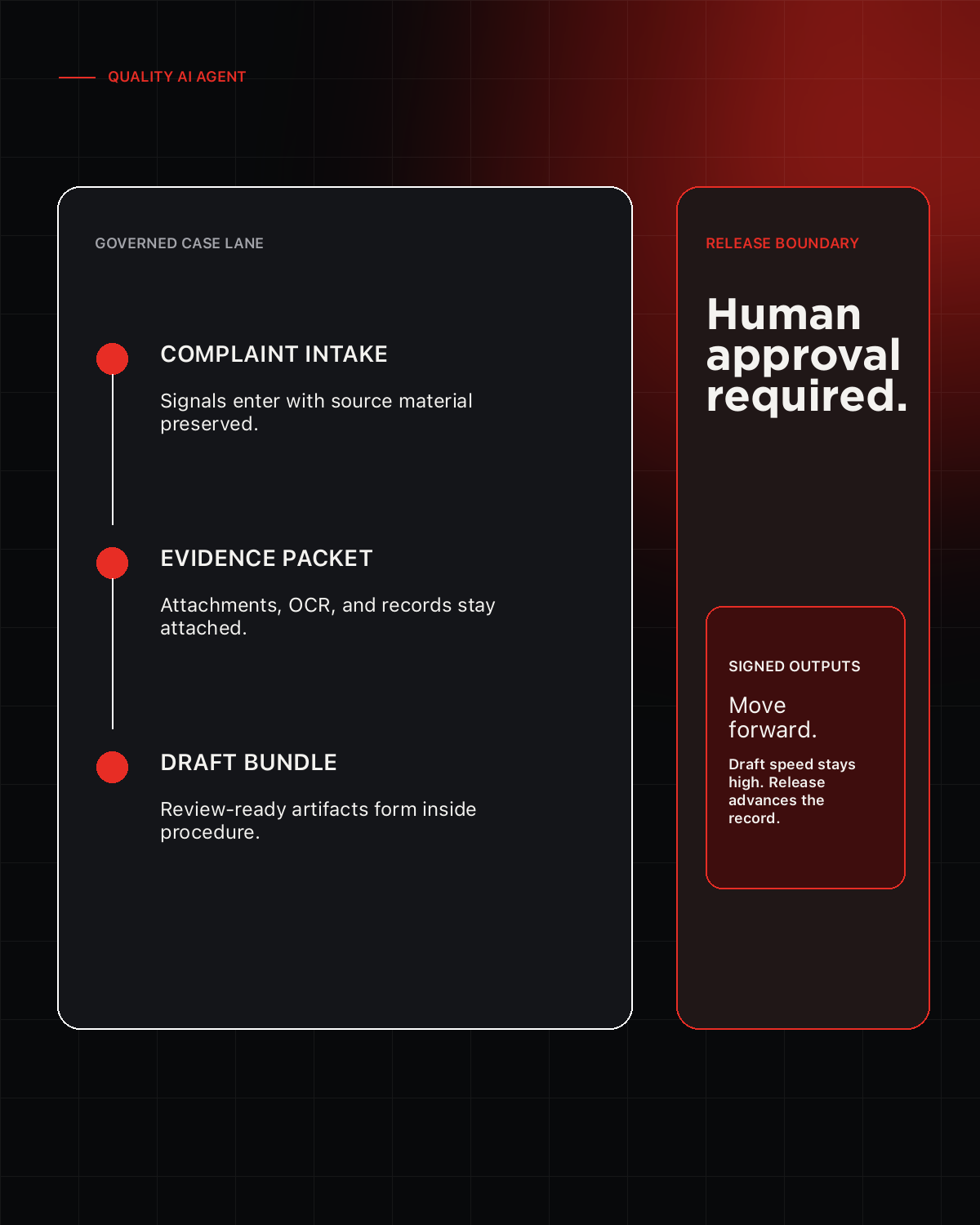
Compliant AI for Regulatory Affairs (CAIRA) sits inside the quality workflow, not around it. It preserves complaints as evidence, structures draft artifacts, routes governed casework, and keeps publication behind a recorded human gate.
A broad-remit quality agent is what keeps governed casework moving.
Prosidio uses Compliant AI for Regulatory Affairs (CAIRA) as a broad-remit QMS AI agent, not a narrow document helper. It is built around modern agentic runtime patterns: stateful case routing, evidence-aware tool use, durable record context, and hard human checkpoints at release.
The agent can be broad-remit because the release gate stays hard.
CAIRA supports regulated work because it preserves the boundary that matters most: draft outputs can move quickly, but official record publication still requires recorded human approval.
Controlled staging artifacts can be assembled with the case context attached.
Signed outputs, not unsigned drafts, are the intended record state.
Working artifacts stay inspectable rather than silently overwritten.
Publication stays tied to the right procedure and sign-off path.
Evidence has to stay attached to the case if the workflow is going to stay fast.
This is what modern agentic infrastructure buys the QMS: intake, evidence handling, draft preparation, and release state remain legible as one governed sequence instead of fragmenting across handoffs.
A complaint or mailbox-driven quality signal enters the workflow and is preserved as case evidence.
OCR and structured packet handling bring attachments and supporting records into one usable case file.
Compliant AI for Regulatory Affairs (CAIRA) prepares review-ready QMS artifacts tied to the correct workflow path and procedure.
Official publication remains behind explicit human review, signing, and release gates.